




In this story
Knowing CPR can save a life
Published February 17, 2026
-
 Copy link
 -
 Share on Facebook
 -
 Share on Bluesky
 -
 Share on X
 -
 Share on LinkedIn
- prevention
George sits on his couch, his wife Jean resting beside him. They’re watching a news anchor on television deliver the weather forecast—sunny and 75 degrees, he hopes to himself. But this is winter in Oregon, after all. Outside, light rain falls. He turns his attention to the window, then back to Jean. He’s about to crack a joke about running away to somewhere warm, but the joke never comes out. Instead, he stares at her, gripped by something he doesn’t understand yet. A sudden flash of panic crosses his face as he clutches his left arm. It doesn’t take long, maybe seconds, before he collapses onto the couch.
Jean frantically jumps up, yelling his name over and over. “George! George!” Nothing. She checks to see if he’s breathing. She checks for a pulse. Nothing. She grabs her phone, sitting idle nearby, and dials 911.
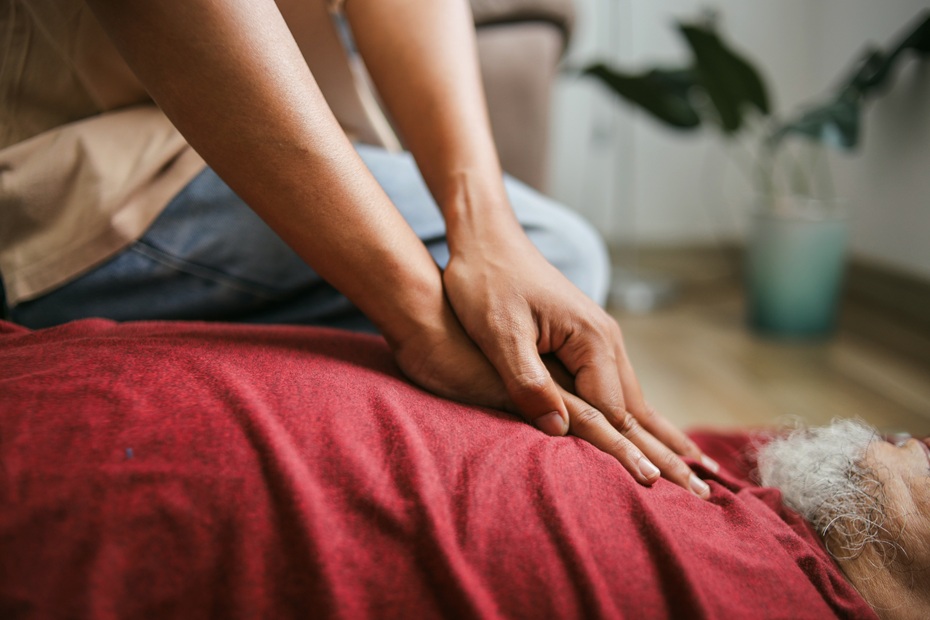
Jean puts the operator on speaker and tells her what happened. The ambulance is on its way. “Fifteen minutes out,” she hears the operator on the phone say. “Perform CPR,” the operator instructs, and Jean does. In one swift motion, she pulls his large body down to the ground, his back flat against the floor. She positions herself on her knees above his torso, her hands placed one over the other at the center of his chest, over the breastbone
Immediate CPR can triple a person’s survival. To find a CPR class in Oregon, visit heart.org/nation.
Jean begins compressions, using her body weight to apply force. She does not stop. For fifteen minutes, she kneels beside him, performing CPR.
Fifteen minutes. Then the ambulance arrives.
You are the first responder until help arrives
According to the American Heart Association, cardiac arrest is a leading cause of death worldwide. Each year in the United States, more than 350,000 cardiac arrests occur outside of a hospital, and about 90% are fatal. But when CPR is performed immediately, it can double or even triple a person’s chance of survival.
“In every cardiac emergency, the real first responder is not always a uniformed professional, but often an everyday bystander,” said Meredith Collett, American Heart Association’s Executive Director for Oregon and Southwest Washington. “Cardiac arrest can strike anywhere — at the gym, in the grocery store or during a child’s soccer game. You are the first responder until help arrives.”
This was the case for George. Jean’s continued CPR saved his life. It allowed the ambulance to take over CPR and transport him to the hospital. It gave him the chance to undergo emergency surgery and receive the care he needed to treat his heart.
Be prepared to act when it matters most
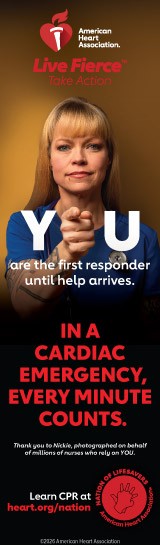
Even though CPR is one of the most important actions a bystander can take during a cardiac emergency, only about 41% of cardiac arrest cases involved CPR from those nearby while waiting for emergency responders to arrive.
“Cardiac arrest is a sudden, life-threatening event, and outcomes depend heavily on what happens in the first few minutes,” said Safina Koreishi, MD, MPH, CareOregon’s Senior Medical Director of Clinical Services. “Immediate CPR helps maintain blood flow to the brain and vital organs until advanced care arrives. It is one of the most effective interventions we have to improve survival and long-term outcomes.”
Jean didn’t plan to be a lifesaver that day, but she acted when it mattered most. Stories like George and Jean’s remind us that ordinary people have the power to make an extraordinary impact, and that knowing CPR can be the difference between loss and survival.
CareOregon encourages individuals to join the American Heart Association in creating a nation of lifesavers by getting CPR certified. To find a CPR class in Oregon, visit heart.org/nation.